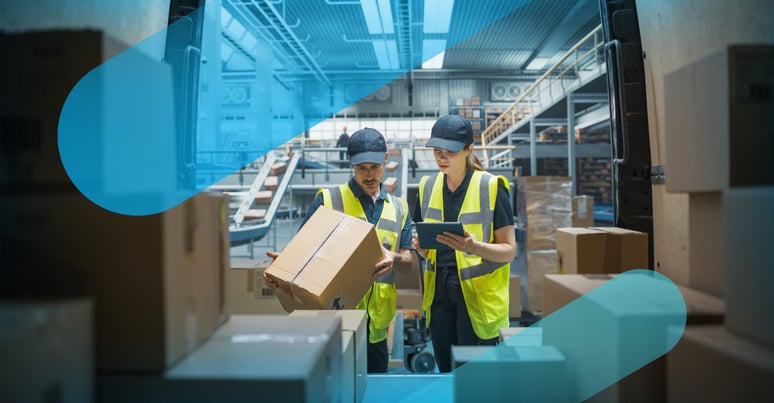
If you've ever shipped an order to a customer, you've participated in fulfillment — even if you were doing it from your garage. A fulfillment center is just a more sophisticated version of that same process, built to handle volume, speed, and complexity at scale.
Here's what a fulfillment center actually is, how the operations work inside one, and how to know when it's time to hand that work off to a professional.
What Is a Fulfillment Center?
A fulfillment center is a facility operated by a third-party logistics provider (3PL) where your inventory is stored, picked, packed, and shipped to end customers. Unlike a traditional warehouse — which is primarily focused on storage — a fulfillment center is a working operation designed to process orders quickly and accurately.
When a customer places an order on your website or through a marketplace, the fulfillment center receives that order, locates the right product in their facility, packages it to your specifications, and ships it to the customer, often within the same day or next day.
How a Fulfillment Center Works: Step by Step
1. Inbound Receiving
Before anything ships out, your inventory has to come in. When your products arrive at a fulfillment center, staff receive and inspect them, count units against your purchase orders, and check for damage. Items are logged in the warehouse management system (WMS) and assigned storage locations.
Getting this step right matters — inaccurate receiving causes inventory discrepancies that ripple through every downstream operation.
2. Storage and Slotting
Products are assigned to storage locations based on factors like size, pick frequency, and SKU velocity. High-velocity items get placed close to packing stations to minimize travel time. Products requiring special conditions — temperature control, humidity sensitivity — are routed to appropriate zones.
3. Order Management and Integration
When a customer order comes in through your ecommerce platform, marketplace, or OMS, it flows into the fulfillment center's WMS automatically. The system generates a pick list and assigns it to a warehouse associate (or an automated picking system, in more advanced operations).
Integration quality matters here. A well-integrated fulfillment partner means orders flow in and tracking flows back in real time — no manual entry, no delays.
4. Pick and Pack
This is the core of fulfillment operations. A picker pulls the ordered item(s) from their storage location; a packer assembles the shipment according to your packaging requirements — box type, filler material, branded inserts, custom tape. A quality check happens here too, verifying the right item, right quantity, right condition before the box is sealed.
5. Shipping and Carrier Selection
Packed orders are weighed, labeled, and handed off to carriers. A sophisticated fulfillment center will use rate shopping technology to select the optimal carrier and service level for each shipment based on destination zone, package weight, and your speed SLAs. This alone can generate meaningful savings on shipping costs.
6. Returns Processing
When customers send products back, the fulfillment center receives the return, inspects the item, and determines its disposition — restock, liquidate, quarantine, or destroy. How a 3PL handles returns has a direct impact on your inventory accuracy and recovery rate.
Fulfillment Center vs. Warehouse: What's the Difference?
These terms get used interchangeably, but they're meaningfully different operations.
| |
Fulfillment Center |
Warehouse |
| Primary function |
Process and ship orders |
Store goods |
| Order volume |
High — designed for throughput |
Low to none |
| Technology |
WMS, OMS integration, automation |
Basic inventory tracking |
| Staffing |
Pick/pack teams, returns staff |
Receiving and storage staff |
| Customer-facing |
Yes — last stop before customer |
No |
| Speed requirement |
Same-day or next-day SLAs |
Not time-sensitive |
If you're thinking about outsourcing your logistics, you want a fulfillment center — not a warehouse.
What to Expect from a Modern Ecommerce Fulfillment Center
The best fulfillment centers today offer far more than four walls and a loading dock. When evaluating options, look for:
Real-time inventory visibility. You should be able to see stock levels, order status, and shipment tracking without picking up a phone.
Multi-channel support. A quality fulfillment center handles DTC, marketplace orders (Amazon, Walmart, TikTok Shop), and wholesale/retail distribution from a single inventory pool.
Value-added services. Kitting, subscription box assembly, custom packaging, retail compliance labeling — these are the services that separate commodity storage from a true operational partner.
Distributed network. The closer your inventory is to your customers, the cheaper and faster your shipping. A 3PL with multiple fulfillment centers lets you split inventory strategically across the country.
Average Fulfillment Center Costs
Fulfillment pricing varies by provider, but most 3PLs charge across a few common buckets:
| Fee Type |
Typical Range |
Notes |
| Receiving |
$15–$40/pallet |
One-time fee when inventory arrives |
| Storage |
$12–$25/pallet/month |
Varies by season and product type |
| Pick & Pack |
$2.50–$5.00/order |
Increases with order complexity |
| Shipping |
Carrier rate + markup |
Volume discounts can offset this significantly |
| Returns processing |
$1.50–$4.00/unit |
Depends on inspection requirements |
For most growing DTC brands, total fulfillment cost lands in the $6–$12 per order range before shipping — though high-velocity brands with optimized contracts often do better.
When Should You Move to a Fulfillment Center?
Handling fulfillment in-house can work early on. But there are clear signs it's time to hand it off:
- You're shipping more than 100–150 orders/month and logistics is consuming your time
- Shipping costs are eating margin because you lack carrier volume discounts
- You're missing SLAs — late shipments, errors, customer complaints are rising
- You want to sell on Amazon, Walmart, or other marketplaces that require fast, reliable fulfillment
- You're expanding into new channels (wholesale, retail, subscriptions) and need infrastructure to support them
Outsourcing fulfillment to a professional 3PL doesn't just free up time — it can actually reduce per-unit costs through carrier rate advantages, operational efficiency, and the ability to split inventory across a distributed fulfillment network.
Why Cart.com
Cart.com's fulfillment network is built for brands that are serious about scaling. With facilities strategically located across the country, full ecommerce fulfillment capabilities, and deep integrations with every major sales channel, Cart gives growing brands enterprise-grade logistics without the enterprise overhead.
Whether you're moving off self-fulfillment for the first time or restructuring a fragmented 3PL setup, we can build a fulfillment model around your SKU mix, channel split, and growth targets.
Talk to Cart.com's fulfillment team →
Related reading: