The math changed fast. What looked like a manageable landed cost in 2024 quietly became a margin crisis by early 2026 as a new round of reciprocal tariffs reshaped the economics of importing apparel from China and other major sourcing countries.
Gap Inc. warned investors that tariffs could add up to $300 million in incremental costs this year alone. Abercrombie & Fitch is projecting a $50 million hit despite sourcing across 16 countries. American Eagle Outfitters anticipates $40 million in added costs and is pushing to reduce China exposure below 10% by the end of the year.
These are not abstract projections. They represent real margin erosion happening right now — and the brands managing it best aren't just renegotiating supplier contracts. They're restructuring how and where they fulfill orders.
Bar chart showing projected 2026 tariff cost impact for three major apparel brands in Cart.com brand colors
Projected 2026 tariff cost impact (USD)
Sources: Gap Inc., Abercrombie & Fitch, and American Eagle Outfitters investor disclosures, 2026.
Why fulfillment strategy is now a tariff mitigation tool
Most apparel brands think about tariff exposure at the sourcing level: where are goods manufactured, and what duties apply at the port of entry? That's the right starting point. But it's only half the picture.
The other half is what happens to inventory once it's inside the U.S. Where it's stored, how quickly it moves, and whether your fulfillment infrastructure can absorb sudden changes in sourcing origin all determine whether a tariff disruption stays a cost line item or becomes a service failure.
When tariff shifts force brands to reshore inventory quickly — moving goods from overseas warehouses to domestic fulfillment centers to avoid further duty exposure — the speed of that transition depends almost entirely on the flexibility of your 3PL partner. Brands with rigid fulfillment contracts and limited network reach get stuck. Brands with omnichannel 3PL partners with national footprints can move in days.
That's not a hypothetical. Cart.com recently helped multiple nine-figure apparel brands collectively representing over 3.5 million units of inventory reshore their fulfillment operations in as little as 10 days — without interrupting order flow across their DTC, wholesale, and retail channels.
What "restructuring the fulfillment network" actually looks like
For large apparel brands, responding to tariff volatility through fulfillment typically involves several interconnected moves.
Inventory repositioning
The immediate priority for most brands is getting domestically-landed inventory into the right fulfillment nodes before additional costs compound. This means evaluating which SKUs have the highest duty sensitivity, where demand is concentrated geographically, and which warehouse locations minimize last-mile shipping costs while maximizing coverage.
A brand selling heavily on the East Coast that has been fulfilling out of a single West Coast warehouse may be absorbing $2–4 per order in excess freight costs it doesn't have to pay. During a tariff crunch — when every margin point matters — that's the kind of inefficiency that surfaces quickly.
Sourcing diversification and dual-origin inventory management
Many brands are actively reducing single-country concentration. Gap is targeting below 3% China sourcing by end of 2026. American Eagle is pushing below 10%. But diversifying sourcing creates its own operational complexity: different origin countries have different lead times, labeling requirements, and landed cost profiles.
Your fulfillment infrastructure needs to handle inventory arriving from Vietnam, Bangladesh, Mexico, and the U.S. simultaneously — with accurate duty and landed cost data attached to each SKU — without creating inventory accuracy problems downstream. That requires a warehouse management system built for multi-origin complexity, not just a standard pick-and-pack operation.
Channel-level cost management
Tariff pressure hits DTC and wholesale channels differently. DTC channels typically have higher return rates and per-unit fulfillment costs, while wholesale channels involve compliance requirements, routing guide adherence, and deduction risk. When margin is tight across the board, brands can't afford to treat every channel the same way.
Smart fulfillment partners help brands route inventory to the highest-margin channel first, hold safety stock against wholesale commitments, and manage returns efficiently enough to re-enter sellable inventory into active stock quickly — rather than letting returned units sit in a processing queue while margin erodes.
The capabilities your 3PL needs to support tariff resilience
Not every fulfillment partner is built to handle the kind of rapid network changes tariff volatility demands. When evaluating whether your current 3PL is the right partner for the environment you're operating in, there are a few capabilities that separate reactive from proactive.
A nationwide multi-node network. A single-warehouse 3PL creates concentration risk. If your inventory is in one facility and your sourcing patterns change, you have no flexibility to reposition without rebuilding your entire fulfillment setup. Multi-node networks allow brands to place inventory closer to demand centers and shift it between nodes as conditions change.
Technology that unifies inventory visibility across channels. Omnichannel inventory management requires a system that shows you a single, real-time view of stock across DTC, wholesale, and retail — regardless of which node it's sitting in. Without that, you're making sourcing and replenishment decisions on stale data.
Rapid onboarding capability. When tariff conditions shift, brands don't have months to transition. The ability to onboard a complex, high-volume apparel brand quickly — with all size and color variants mapped, integrations live, and test orders validated — is a specific operational muscle that most 3PLs don't have.
Value-added services that support supplier transitions. When you shift from one sourcing country to another, inventory often arrives with different labeling, ticketing, or packaging. A 3PL with robust VAS capabilities (re-ticketing, re-labeling, kitting, retail prep) can absorb those changes in the warehouse rather than requiring you to rebuild supplier-level processes from scratch.
What brands are getting right in 2026
The apparel brands navigating tariff volatility most effectively share a few common traits. They moved early — before policy changes forced their hand. They treated fulfillment as a strategic lever, not just an operational cost center. And they chose 3PL partners with the infrastructure and technology to move at the speed the market requires.
The brands still struggling are those that locked into rigid fulfillment arrangements optimized for a trade environment that no longer exists, with providers who lack the network flexibility to adapt.
The good news is that the fulfillment network is one of the faster things to restructure. Unlike sourcing relationships — which take months or years to shift — a strong 3PL partner can transition a high-volume apparel brand in a matter of weeks without disrupting the customer experience.
How Cart.com helps apparel brands build tariff-resilient fulfillment
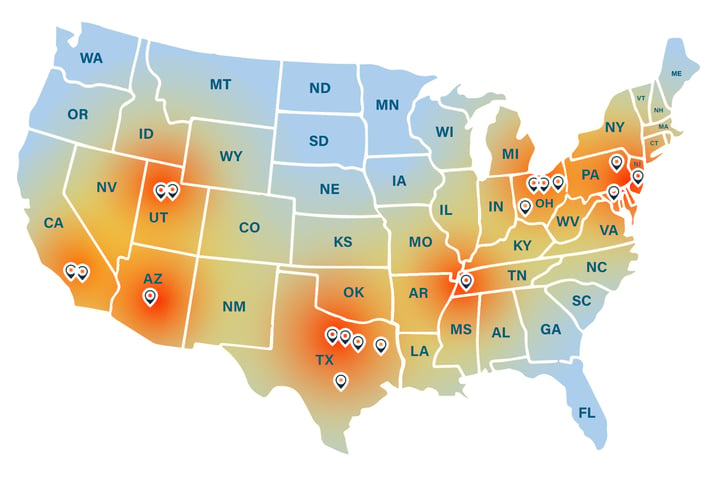
Cart.com operates 17 fulfillment facilities and over 10 million square feet of warehouse space across a nationwide network — purpose-built for omnichannel apparel brands that need to move quickly and maintain accuracy at scale.
Our proprietary Constellation Order Management System provides real-time inventory visibility across every channel and node, giving brands the data they need to make fast, accurate decisions when trade conditions shift. And our onboarding process is designed to get complex, high-volume brands live without disrupting order flow — as demonstrated when we reshored millions of units for multiple nine-figure brands within days of evolving trade policy.
If your fulfillment network isn't built for the volatility you're operating in, now is the right time to evaluate your options. Contact our team to learn how Cart.com can help your brand build a more resilient fulfillment strategy.