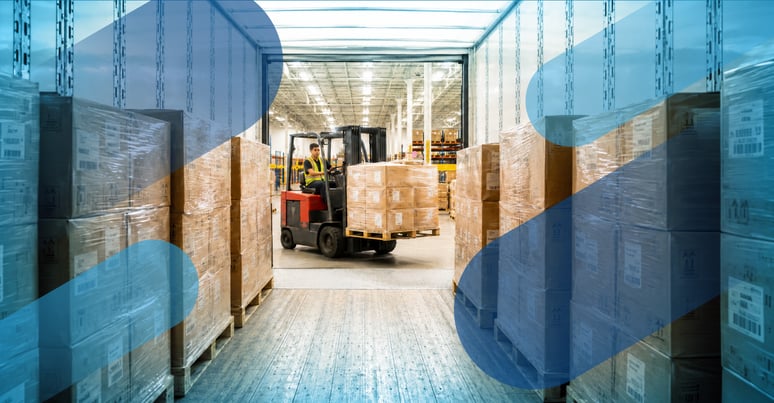
If you've built a DTC brand and you're now getting interest from retailers or wholesale partners, the fulfillment requirements are about to get significantly more complex. B2B fulfillment — selling to businesses, retailers, and distributors rather than directly to consumers — operates under a completely different set of rules, timelines, and compliance standards.
Getting this right from the start saves you from the chargebacks, compliance failures, and operational chaos that trip up brands making the transition from DTC-only.
What Is B2B Fulfillment?
B2B fulfillment (also called wholesale fulfillment or retail distribution) is the process of shipping products to business buyers — retailers, distributors, wholesalers — rather than to individual consumers. Instead of hundreds of small orders going to individual addresses, B2B fulfillment typically involves fewer, larger orders going to distribution centers, retail stores, or commercial locations.
The scale is different. The compliance requirements are different. And the consequences of errors are different: in B2C, a mistake means one unhappy customer. In B2B, it can mean a retailer chargeback, a deducted invoice, or a terminated vendor relationship.
B2B vs. B2C Fulfillment: Key Differences
| |
B2C (DTC) |
B2B (Wholesale/Retail) |
| Order size |
Small (1–5 units) |
Large (pallets, cases) |
| Number of orders |
High volume |
Lower volume, higher value |
| Ship-to address |
Consumer homes |
Stores, DCs, business addresses |
| Delivery windows |
Best effort (2–5 days) |
Strict scheduled windows |
| Labeling |
Standard carrier label |
GS1 compliance, UCC-128 barcode, ASN |
| EDI required |
No |
Usually yes (EDI 850/810/856/860) |
| Chargebacks |
Rare |
Common for non-compliance |
| Packaging |
Brand experience focus |
Retail-ready, shelf-compliant |
| Lead time |
Same-day or next-day |
Days to weeks in advance |
The single biggest operational difference: compliance. Every retail buyer — Target, Walmart, Costco, specialty retailers — has a vendor compliance guide. Those guides specify exactly how your products must be labeled, how cartons must be packed, what paperwork must accompany the shipment, and when it must arrive. Deviation triggers chargebacks.
How B2B Fulfillment Works
Purchase Order Receipt
A wholesale order starts with a purchase order (PO) from the buyer. POs specify the items, quantities, prices, delivery location, and required delivery window. Your 3PL or fulfillment team receives the PO and begins planning the outbound shipment.
For large retail partners, POs are transmitted electronically via EDI (Electronic Data Interchange), typically in EDI 850 format.
Inventory Allocation and Production Planning
Wholesale orders often require larger quantities of a single SKU than DTC orders. Your inventory needs to be allocated against the PO, and if kitting, labeling, or special packaging is required, that production work needs to be scheduled ahead of the ship window.
Compliance Labeling
This is where most brands stumble. Retail compliance requires:
- GS1-compliant barcodes (UPC on consumer units, ITF-14 on inner packs, SSCC on pallets)
- UCC-128 labels on every carton with specific data elements in specific formats
- Pallet labels meeting buyer specifications
- Carton content labels if required
If your current 3PL can't produce compliant labels natively, you're going to be doing this manually — and that's a problem at volume.
Advance Ship Notice (ASN)
Most retail buyers require an Advance Ship Notice (ASN) — an EDI 856 document transmitted when the shipment leaves your facility. The ASN tells the buyer exactly what's in the shipment, how it's packed, and when to expect it. Late or inaccurate ASNs are a chargeback trigger.
Freight and Delivery
B2B shipments typically move on pallets via LTL (less-than-truckload) or FTL (full truckload) freight, not small parcel. Delivery is to a retail DC or store — which means scheduled appointments, check-in processes, and no tolerance for late arrivals or non-compliant freight.
The Chargeback Problem — and How to Avoid It
Retail chargebacks are deductions taken directly from your invoice when a shipment doesn't meet the buyer's requirements. They're common, they're painful, and they're almost always preventable.
The most common triggers:
- Labeling errors — wrong barcode, missing label, incorrect data
- Late delivery — missed the delivery window
- ASN issues — late transmission, data mismatch with actual shipment
- Short shipments — quantity received doesn't match PO
- Packaging non-compliance — wrong carton size, not shelf-ready
- Missing documentation — packing list absent, invoice mismatch
The solution is a fulfillment partner with genuine retail compliance expertise — one that has processed shipments for your specific retail buyers before and knows their requirements cold.
Running DTC and B2B from the Same Inventory
One of the most significant advantages of working with a sophisticated 3PL is the ability to run DTC and B2B fulfillment from a single unified inventory pool. This eliminates the need to pre-allocate inventory to separate channels and gives you flexibility to shift allocation in real time based on demand.
Without this, brands often over-allocate to B2B (to protect retail relationships) and end up with DTC stockouts — or they under-allocate and can't fulfill retail POs on time. A unified inventory model with a single WMS solves this structurally.
Cart.com's B2B fulfillment capabilities are built to operate alongside DTC from the same inventory pool, with full EDI support and retail compliance expertise built in.
What to Look for in a B2B Fulfillment Partner
Not every 3PL can handle B2B well. Ask:
Do you have EDI capabilities? Can you send and receive EDI 850, 810, 856, and 860 transactions natively?
Which retailers have you worked with? Experience with your specific buyers matters — compliance guides differ, and a 3PL that knows Target's requirements is different from one that's never shipped to a major retailer.
How do you handle compliance labeling? Can you produce GS1-compliant UCC-128 labels in your WMS, or will my team need to generate these manually?
What's your chargeback rate with current retail clients? Ask for this number. A 3PL with strong retail compliance experience should be proud to share it.
Can you support both DTC and B2B from a single inventory pool? This is the operational architecture question that separates sophisticated providers from basic ones.
Cart.com's B2B Fulfillment Services
Cart.com's B2B fulfillment supports brands selling to retailers, distributors, and wholesale partners alongside their DTC operations. Full EDI support, GS1-compliant labeling, retail compliance for major national and specialty retailers, and LTL/FTL freight management — all from the same fulfillment infrastructure that handles your DTC volume.
Talk to Cart.com's fulfillment team →
Related reading: