Kitting is one of those fulfillment capabilities that sounds simple until you're doing it at scale. Combining multiple SKUs into a single shippable unit requires coordination across inventory management, pick-and-pack operations, and your OMS — and when it's done well, it's a meaningful lever for both revenue and customer experience.
Here's what kitting actually is, how it works inside a fulfillment operation, and when it's worth building into your logistics setup.
What Is Kitting in Fulfillment?
Kitting is the process of taking multiple individual items (components) and assembling them into a single, pre-packaged unit (a kit) before shipment. The finished kit gets its own SKU and ships as one unit, even though it contains several distinct products inside.
Common examples:
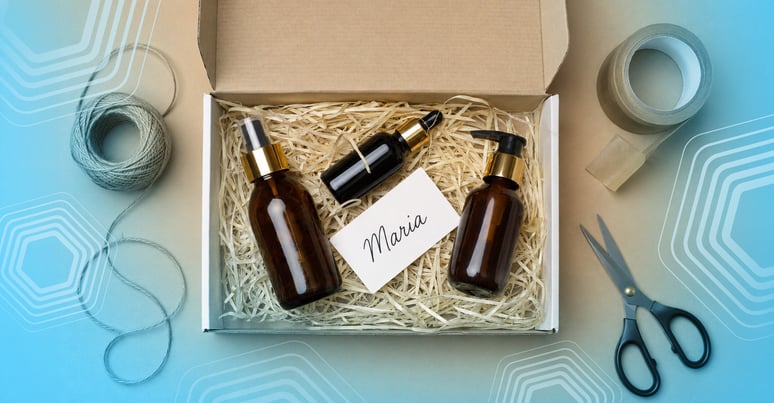
- A skincare brand that bundles a cleanser, toner, and moisturizer into a "Starter Set" box
- A supplement company that assembles a 30-day wellness bundle across 4 products
- A consumer electronics brand that pre-kits a device with its accessories and manual
- A subscription box with monthly themed products assembled before fulfillment
In each case, the individual component SKUs come out of the same inventory pool, and the assembled kit becomes the sellable unit.
Kitting vs. Bundling: Is There a Difference?
The terms are often used interchangeably, but there's a useful distinction:
Bundling typically refers to the commercial packaging — grouping products together for a promotion or offer, often without pre-assembly. A bundle might exist as a product listing that triggers multiple individual items to be pulled at pick time.
Kitting refers to the physical assembly process — actually building the packaged unit in advance. Kitted products are pre-assembled and sitting in the warehouse as a single, ready-to-ship SKU.
The difference matters operationally. Kitting requires upfront labor (building the kits) but speeds up pick-and-pack at fulfillment time. Bundling-at-pick adds labor to each individual order but keeps inventory flexible. Which approach is right depends on your order volume, SKU variability, and whether the kits are "fixed" configurations or vary by order.
How Kitting Works Inside a Fulfillment Center
Step 1: Components arrive. Individual SKUs come into the fulfillment center's inventory and are logged separately.
Step 2: Kitting instructions. Your 3PL works from a bill of materials (BOM) — a document specifying exactly what goes into each kit, in what quantities, and how it's packaged. The BOM is the source of truth for every kitting run.
Step 3: Assembly. Workers (or in some facilities, automation) pull components and assemble the kit according to the BOM. This includes packing materials, inserts, branded collateral, and any quality checks.
Step 4: Kit SKU creation. The finished kit is scanned and logged as a new inventory unit with its own SKU. Component inventory is decremented accordingly.
Step 5: Storage and fulfillment. Kitted units go into storage like any other product. When an order comes in for the kit, it's fulfilled as a single pick — fast, accurate, consistent.
When Kitting Makes Sense for Your Brand
Kitting adds operational complexity, so it needs to pay off. Here are the scenarios where it consistently does:
High-volume fixed configurations. If you sell the same bundle 500 times a week, pre-kitting is faster and more cost-efficient than assembling at pick time for every order. The upfront labor investment pays back in pick speed and accuracy.
Subscription boxes. Subscription models are almost always kitted — the monthly configuration is pre-assembled in batches, which is the only practical way to hit shipping deadlines at volume.
Gift or promotional sets. Seasonal kits (holiday gift sets, Mother's Day bundles, new product launches) are high-demand, time-boxed SKUs that need to be ready before the volume hits.
Retail and wholesale. Retail partners often require pre-assembled display-ready units. Kitting at the 3PL level means your products arrive shelf-ready and compliant.
Reducing order complexity. If customers frequently order the same set of individual items together, kitting them simplifies your listings, reduces pick errors, and speeds up fulfillment.
Kitting's Impact on Inventory Management
Kitting requires careful inventory logic. Component stock needs to be tracked both as individual units and in terms of how many complete kits they can produce. Running out of one component means you can't build more kits — which means stockouts on your kit SKU even when you have most of the components in stock.
A sophisticated WMS will handle this automatically: tracking component quantities, calculating kit buildable quantity, and alerting you when a component is running low. If your current 3PL is managing this in spreadsheets, that's a problem.
You also need clear rules for what happens to kitted inventory when a kit is de-kitted (broken apart to fulfill component-level orders). Not every 3PL handles this gracefully.
Kitting Costs: What to Expect
Kitting is typically billed as a value-added service, charged per kit assembled. Rates vary based on the number of components, packaging complexity, and whether branded materials are involved:
| Kit Complexity |
Typical Assembly Cost |
| 2–3 components, standard box |
$0.75–$1.50/kit |
| 4–6 components, custom packaging |
$1.50–$3.00/kit |
| Complex assembly (fragile, multiple inserts) |
$3.00–$6.00+ /kit |
Add component storage costs and packaging materials (often pass-through), and kitting projects are still typically cost-effective at scale — especially compared to hiring in-house staff to manage assembly runs.
Cart.com's Kitting Capabilities
Cart.com's fulfillment operations include kitting and assembly as a core value-added service. Whether you need simple 2-SKU bundles or complex subscription box configurations, the team can execute to your BOM and handle the inventory tracking logic on the backend.
Brands that come to Cart.com for kitting typically see faster fulfillment times on kit SKUs, fewer pick errors, and cleaner inventory visibility compared to managing kitting workflows at less specialized providers.
Talk to us about kitting for your brand →
Related reading: